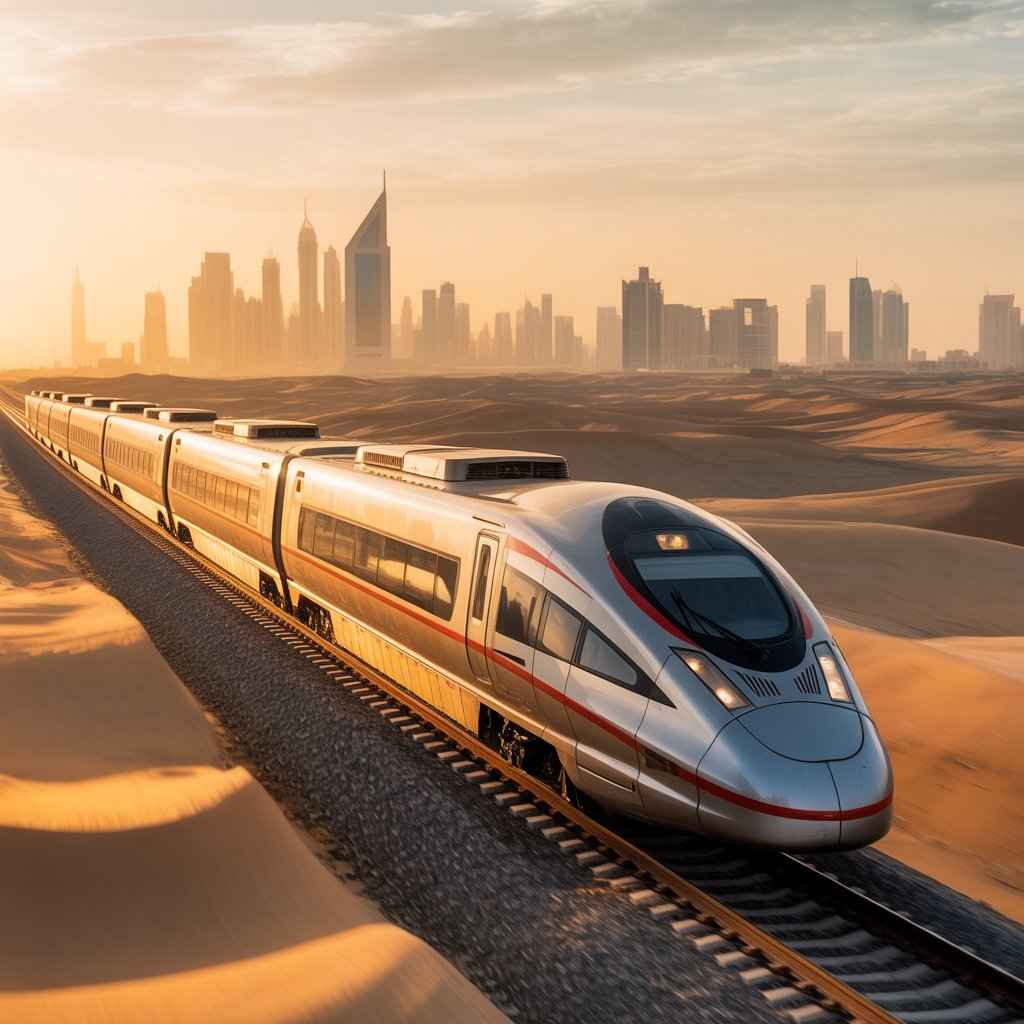
Traveling by train from Dubai to Abu Dhabi represents the future of inter-emirate transportation in the UAE, offering a modern, efficient, and comfortable alternative to road travel. While a direct high-speed rail connection between the two cities is still in development, understanding the current and upcoming train from Dubai to Abu Dhabi options is essential for smart travel planning. This comprehensive guide covers everything you need to know about rail travel between these two major UAE cities, including the existing Etihad Rail passenger service plans, alternative rail-connected routes, practical travel tips, and what to expect from the UAE’s rapidly expanding railway network. Whether you’re a daily commuter, a business traveler, or a tourist exploring the Emirates, this guide will help you navigate your rail journey with confidence and efficiency.
Understanding the UAE Rail Network: Current Status and Future Vision
The United Arab Emirates is currently undergoing a transportation revolution with the development of the Etihad Rail network, a massive infrastructure project designed to connect all seven emirates and eventually link with the wider GCC railway network. While the train from Dubai to Abu Dhabi as a direct passenger service is not fully operational as of early 2025, significant progress has been made, and partial services are becoming available. The Etihad Rail project is divided into stages, with Stage One connecting Shah and Habshan to Ruwais for industrial use, Stage Two connecting the UAE from the Saudi border to Fujairah, and Stage Three focusing on passenger services between urban centers.
The vision for passenger rail travel between Dubai and Abu Dhabi is ambitious: a high-speed connection that would reduce travel time to approximately 50 minutes, compared to the current 1.5 to 2.5 hours by road depending on traffic. Stations are planned for key locations including Dubai’s Maritime City and Abu Dhabi’s ICAD (Khalifa Industrial Zone), with future extensions to city centers. For now, travelers have several rail-connected options and should stay informed about rapid developments as the UAE prepares to launch its first intercity passenger rail services. This guide will cover both current alternatives and what to expect as full services roll out in the coming months and years.
Current Rail-Connected Travel Options: Practical Alternatives
While awaiting the full high-speed passenger service, travelers have several effective rail-connected options for traveling between Dubai and Abu Dhabi that combine trains with other transportation modes.
Dubai Metro to Ibn Battuta + Bus to Abu Dhabi
This is currently the most rail-integrated option available:
- Take Dubai Metro: Board the Red Line to Ibn Battuta Station (approximately 30-45 minutes from Burj Khalifa/Dubai Mall area)
- Transfer to Bus: At Ibn Battuta Bus Station (adjacent to metro station), take the E101 bus to Abu Dhabi Central Bus Station
- Journey Details:
- Metro fare: 3-8.5 AED depending on starting point
- Bus fare: 25 AED
- Metro frequency: Every 4-7 minutes during peak hours
- Bus frequency: Every 20-30 minutes, 24/7 service
- Total travel time: 2-2.5 hours depending on connections
- Total cost: Approximately 28-33.5 AED one-way
Advantages: Seamless connection between rail and road transport, air-conditioned waiting areas, frequent services, economical pricing.
Considerations: Requires one transfer, bus portion subject to road traffic conditions, luggage space limitations on bus.
Dubai Metro to Centrepoint (Rashidiya) + Alternative Transport
For those heading to specific Abu Dhabi destinations:
- Take Dubai Metro: Red Line to Centrepoint Station (formerly Rashidiya)
- Choose connection: From here, options include:
- Private taxi: 250-350 AED to Abu Dhabi city center
- Ride-hailing: Careem/Uber approximately 220-320 AED
- Rental car pickup: Several rental agencies located near the station
- Journey Details:
- Metro to end of line: 5.5-10.5 AED
- Subsequent transport: Varies by choice
- Total travel time: 1.5-2 hours with private transport
- Total cost: Significantly higher than bus options
Advantages: Flexibility in final destination within Abu Dhabi, potentially faster than bus if traffic is light.
Considerations: Much higher cost, still subject to road traffic conditions on Abu Dhabi routes.
Etihad Rail Passenger Service: What We Know So Far
The much-anticipated Etihad Rail passenger service promises to revolutionize travel between Dubai and Abu Dhabi. Here’s what has been confirmed and what travelers can expect:
Planned Route and Stations
- Main Route: Connecting Abu Dhabi’s ICAD (Khalifa Industrial Zone) with Dubai’s Maritime City
- Key Stations:
- Abu Dhabi: ICAD, Khalifa Port, Zayed Port, downtown station (planned)
- Dubai: Maritime City, Dubai Silicon Oasis, downtown extension (planned)
- Additional stops: Shah, Habshan, Mirfa, Ghuwaifat, Ruwais, Al Sila`
- City Center Connections: Shuttle services planned to connect main stations with city centers
Expected Specifications and Features
- Speed: Up to 200 km/h for passenger services
- Capacity: Each train expected to carry approximately 400 passengers
- Frequency: Initial plans suggest trains every 20-30 minutes during peak hours
- Travel Time: Approximately 50 minutes between Dubai and Abu Dhabi main stations
- Class Options: Expected to include First Class, Business Class, and Economy
- Amenities: WiFi, power outlets, food and beverage services, luggage storage
- Accessibility: Fully accessible for passengers with disabilities
Current Status and Timeline
- Infrastructure: Track construction between the cities is largely complete
- Testing: Initial testing phases have been conducted
- Official Launch: Expected gradually throughout 2024-2025
- Initial Service: Likely to begin with limited schedules and stations, expanding over time
Ticket Information: Pricing and Purchasing
Expected Etihad Rail Pricing
While official pricing hasn’t been announced, industry estimates suggest:
- Economy Class: 50-75 AED one-way
- Business Class: 100-150 AED one-way
- First Class: 150-250 AED one-way
- Family/Group Discounts: Likely to be available
- Commuter Passes: Expected for frequent travelers
Current Alternative Ticket Options
For existing rail-connected travel:
- Nol Card: For Dubai Metro portion (reloadable card available at all metro stations)
- Bus Ticket: Purchased with cash or Nol card at Ibn Battuta bus station
- Integrated Tickets: Possible future integration with Etihad Rail services
Expected Purchasing Channels
- Mobile App: Dedicated Etihad Rail app expected
- Online Portal: Web-based booking system
- Station Kiosks: Self-service ticket machines
- Ticket Counters: Staffed counters at major stations
- Travel Agencies: Possibly available through third-party sellers
Station Locations and Facilities
Dubai Departure Points
Ibn Battuta Station (Current Main Option):
- Location: Adjacent to Ibn Battuta Mall
- Metro Connection: Direct connection to Red Line
- Bus Connection: Integrated with Ibn Battuta Bus Station
- Facilities: Shopping mall, food court, waiting areas, restrooms, taxi stand
- Parking: Available but often crowded
Maritime City Station (Future Etihad Rail):
- Planned Location: Near Port Rashid
- Expected Facilities: Ticket counters, waiting lounges, retail, food outlets, parking
- Transport Connections: Metro connection planned, taxi stands, bus services
Additional Future Stations:
- Dubai Silicon Oasis
- Possible downtown extension near Burj Khalifa area
Abu Dhabi Arrival Points
Abu Dhabi Central Bus Station (Current Option):
- Location: Between Hamdan Street and Hazza Bin Zayed Street
- Facilities: Basic waiting area, restrooms, small shops
- Connections: Local buses, taxis, ride-hailing services
- To City Center: Approximately 2-3 km to major hotels and attractions
ICAD/Khalifa Industrial Zone Station (Future Etihad Rail):
- Initial Location: Approximately 30-40 minutes from Abu Dhabi city center
- Expected Shuttle Services: To downtown Abu Dhabi, major hotels, Yas Island
- Future Expansion: Downtown station planned for later phase
Travel Experience: What to Expect Onboard
Current Bus Experience (Ibn Battuta Route)
- Seating: Comfortable, reclining seats with adequate legroom
- Luggage: Overhead racks and under-bus storage for larger items
- Amenities: Air conditioning, sometimes WiFi (unreliable)
- Entertainment: None provided; bring your own devices
- Refreshments: Not provided; bring water and snacks
Expected Etihad Rail Experience
Based on announced specifications:
- Seating Comfort: Spacious seats with more legroom than buses
- Luggage Storage: Dedated overhead and end-of-carriage storage
- Connectivity: Reliable WiFi and mobile network coverage
- Power Access: USB and standard power outlets at seats
- Food Service: Café car expected with light meals and beverages
- Entertainment: Possibly seatback screens or streaming services
- Quiet Zones: Likely to be designated on some carriages
Practical Travel Tips for Your Journey
Planning Your Trip
- Check Schedules: For current options, verify bus schedules at rta.ae
- Allow Buffer Time: Add 30-60 minutes for connections and unexpected delays
- Consider Traffic Patterns: Road portions affected by rush hours (7-9 AM, 5-7 PM)
- Weekend Considerations: Thursday evening and Friday morning often busier
Booking and Tickets
- Nol Card Preparation: Ensure sufficient balance for metro portion
- Cash for Bus: Have exact change (25 AED) or ensure Nol card has enough credit
- Future Booking: Once operational, book Etihad Rail tickets in advance for peak times
- Digital Tickets: Use official apps for convenience and potential discounts
Luggage Considerations
- Size Limitations: Buses have reasonable luggage allowances; trains expected to be more generous
- Essentials Only: For day trips, minimize luggage for easier travel
- Valuables: Keep important items with you rather than in storage areas
- Future Services: Etihad Rail may offer checked luggage options
Comfort and Convenience
- Seat Selection: On buses, earlier boarding offers better seat choice
- Temperature: Carry a light jacket as air conditioning can be strong
- Entertainment: Download movies, podcasts, or reading material for the journey
- Snacks and Water: Bring refreshments, especially for bus journeys
Comparing Travel Options: Train vs. Alternatives
Cost Comparison
- Train (Expected): 50-250 AED depending on class
- Bus (Current): 28-34 AED including metro connection
- Private Taxi: 250-350 AED one-way
- Rental Car: 150-300 AED per day plus fuel and tolls
- Ride-hailing (Uber/Careem): 220-320 AED
Time Comparison
- Train (Expected): 50 minutes station-to-station plus city transfers
- Bus (Current): 2-2.5 hours total
- Private Car: 1.5-2.5 hours depending on traffic
- Helicopter/Seaplane: 45 minutes but significantly more expensive
Comfort and Experience
- Train (Expected): Most comfortable, spacious, with amenities
- Bus (Current): Basic comfort, subject to road conditions
- Private Car: Door-to-door convenience but stressful in traffic
- Chauffeur Service: Maximum comfort but highest cost
Connections at Each End: Getting to and from Stations
In Dubai: Accessing Departure Points
To Ibn Battuta Station:
- Dubai Metro: Most convenient approach via Red Line
- Taxi/Ride-hailing: Direct to station entrance
- Bus: Multiple routes connect to Ibn Battuta
- Driving: Parking available but limited during peak times
To Future Etihad Rail Stations:
- Integrated Transport: Expected connections with Dubai Metro and buses
- Parking: Likely to have substantial parking facilities
- Drop-off Zones: Designated areas for taxis and private vehicles
In Abu Dhabi: From Arrival to Final Destination
From Central Bus Station:
- Local Buses: Routes to major areas including Corniche, Khalidiya, Tourist Club Area
- Taxis: Readily available, 15-40 AED to most city hotels
- Ride-hailing: Careem/Uber readily available
From Future Etihad Rail Stations:
- Shuttle Services: Expected to major hotels and business centers
- Local Integration: Connection to Abu Dhabi’s public bus network
- Taxi Services: Dedicated stands at stations
- Rental Cars: Possibly available at major stations
Business Travel Considerations
Current Options for Business Travelers
- Timing: Allow at least 2.5 hours for bus/metro option
- Productivity: Limited work capability on bus; better in taxi with WiFi
- Meetings: Schedule considering travel time, especially for morning meetings
- Documents: Keep business materials easily accessible
Future Train Advantages for Business
- Productivity: Expected reliable WiFi and work-friendly environment
- Schedule Reliability: Less affected by traffic conditions
- Comfort: More space for working during journey
- Networking: Potential interaction with other business travelers
Corporate Services Expected
- Group Bookings: Special rates for corporate clients
- Meeting Facilities: Possible business lounges at major stations
- Loyalty Programs: Expected for frequent business travelers
- Integrated Solutions: Possibly combined with hotel and meeting packages
Tourist Travel: Exploring Both Cities
Day Trip Planning
From Dubai to Abu Dhabi:
- Morning Departure: Catch early bus/train to maximize day
- Key Attractions: Sheikh Zayed Grand Mosque, Louvre Abu Dhabi, Qasr Al Watan
- Return Timing: Last bus/train typically around 11 PM-12 AM
- One-Day Highlights: Mosque + one major museum + Corniche
From Abu Dhabi to Dubai:
- Popular Destinations: Burj Khalifa, Dubai Mall, Dubai Fountain, Old Dubai
- Efficient Routing: Choose attractions clustered together
- Evening Options: Dubai Fountain show, dinner with views
- Return Planning: Allow extra time for evening traffic if taking bus
Multi-Day Itineraries
- Accommodation: Consider staying overnight to experience both cities fully
- Luggage: Train travel expected to make multi-day trips with luggage easier
- Combined Tickets: Future potential for tourism packages combining attractions in both cities
Accessibility and Special Needs
Current Accessibility
- Dubai Metro: Fully accessible with elevators, tactile paths, priority seating
- Buses: Most are accessible but space can be limited
- Stations: Ibn Battuta has good accessibility features
Expected Train Accessibility
- Platform Access: Level boarding or ramps for wheelchair access
- Onboard Facilities: Accessible seating and restrooms
- Assistance Services: Expected to be available with advance notice
- Visual/Audio Aids: Announcements and signage for visually/hearing impaired
Traveling with Children
- Current: Buses accommodate strollers but space is limited
- Future: Trains expected to have family-friendly facilities
- Fares: Children under 5 typically free, reduced fares for older children
Safety and Security
Current Safety Measures
- Metro Security: Baggage screening at all stations
- Bus Safety: Registered drivers, regular vehicle inspections
- General Advice: Keep valuables secure, be aware of surroundings
Expected Train Security
- Station Security: Similar to airport security screening likely
- Onboard Safety: Emergency procedures, trained staff
- Travel Documents: ID may be required for ticket verification
Health Considerations
- COVID-19 Measures: Follow current regulations (masks may be required)
- Medical Needs: Carry necessary medications with you
- Emergency Contacts: Have local emergency numbers saved
Seasonal Considerations
Peak Travel Times
- Weekends: Thursday evening through Friday are busiest
- Holidays: Eid, National Day, and school holidays increase demand
- Events: Major conferences or exhibitions in either city
- Weather: Cooler months (November-March) see more tourist travel
Summer Travel
- Heat Considerations: All transport is air-conditioned
- Hydration: Carry water, especially for bus transfers
- Clothing: Light layers for temperature changes between transport and outdoors
Special Events Impact
- Formula 1 in Abu Dhabi: Significantly increased demand for Abu Dhabi travel
- Dubai Shopping Festival: More travelers to Dubai
- Expo City Events: Potential increased travel between cities
Future Developments and Expansion
GCC Railway Connection
- Long-term Vision: Connection to Saudi Arabia, Oman, and other GCC countries
- International Travel: Potential for direct trains to Riyadh, Muscat, etc.
- Economic Impact: Facilitated trade and tourism across borders
Technology Integration
- Smart Ticketing: Integration with existing systems like Nol Card
- Real-time Information: Apps with live updates and notifications
- Seamless Travel: Potential integration with airlines for combined tickets
Sustainability Initiatives
- Electric Trains: Environmentally friendly compared to road transport
- Reduced Emissions: Contributing to UAE’s sustainability goals
- Eco-tourism: Enhanced appeal for environmentally conscious travelers
Frequently Asked Questions (FAQs)
Q1: Is there currently a direct train from Dubai to Abu Dhabi?
A: As of early 2024, there is no direct passenger train service. The Etihad Rail passenger service is expected to launch gradually through 2024-2025. Currently, the most rail-connected option is Dubai Metro to Ibn Battuta Station, then bus to Abu Dhabi.
Q2: When will the Etihad Rail passenger service start?
A: The service is expected to begin phased operations in 2024-2025, starting with limited routes and schedules before expanding to full service between Dubai and Abu Dhabi.
Q3: How much will the train ticket cost?
A: Official pricing hasn’t been announced, but estimates suggest 50-75 AED for Economy Class, 100-150 AED for Business Class, and 150-250 AED for First Class one-way between Dubai and Abu Dhabi.
Q4: How long will the train journey take?
A: The high-speed train is expected to take approximately 50 minutes station-to-station, plus additional time for transfers to/from city centers.
Q5: Where will the stations be located?
A: Initial stations will be at Dubai Maritime City and Abu Dhabi’s ICAD (Khalifa Industrial Zone), with shuttle services to city centers. Additional stations are planned for future expansion.
Q6: Can I take luggage on the train?
A: While specific policies haven’t been announced, trains are expected to have generous luggage storage. Large luggage will likely be accommodated, similar to European intercity trains.
Q7: Will there be food service on the train?
A: Yes, café cars with light meals and beverages are expected, particularly on longer-distance services.
Q8: How frequent will the trains be?
A: Initial estimates suggest trains every 20-30 minutes during peak hours, possibly less frequent during off-peak times initially.
Q9: Do I need to book tickets in advance?
A: For the initial launch period, advance booking is recommended. Once fully operational, there will likely be options for both advance purchase and on-the-day tickets.
Q10: Will the train connect to Abu Dhabi International Airport?
A: While not in the initial phase, connections to AUH are planned for future expansion of the network.
Making the Most of Your Journey
Scenic Highlights Along the Route
Even without coastal views expected on the initial route, the journey offers:
- Urban Transitions: Watching Dubai’s skyline fade into Abu Dhabi’s distinct architecture
- Desert Vistas: Views of the changing landscape between the cities
- Industrial Marvels: Glimpses of the UAE’s impressive infrastructure developments
Cultural Insights
- People Watching: Observing the diverse mix of residents and visitors
- Local Life: Glimpses of communities between the major urban centers
- Economic Story: Visual evidence of the UAE’s development story
Travel Photography
- Window Views: Unique perspectives of the Emirates from rail perspective
- Station Architecture: Modern design of UAE’s new transportation hubs
- Journey Documentation: Capturing this new chapter in UAE transportation history
Conclusion: The Future of Inter-Emirate Travel
The development of train travel from Dubai to Abu Dhabi represents more than just a new transportation option—it symbolizes the UAE’s commitment to innovation, sustainability, and connectedness. While current options require some patience and planning, the imminent launch of Etihad Rail passenger services promises to revolutionize how residents and visitors move between these two dynamic cities.
For now, travelers can utilize the well-organized bus and metro connections, appreciating the efficiency and affordability they offer while anticipating the enhanced comfort and speed of future rail services. As the UAE continues to build its railway infrastructure, the vision of seamless, rapid connections between all emirates moves closer to reality.
Whether you choose current options or wait for the full train service launch, traveling between Dubai and Abu Dhabi offers insights into the UAE’s remarkable growth and ambition. The journey itself becomes part of the experience, connecting not just locations but different expressions of Emirati vision and achievement.
Stay informed about developments, plan your journeys with consideration for timing and comfort, and look forward to the day when a quick, smooth train ride will be the standard way to travel between these two remarkable cities.
