Traveling between Dubai and Abu Dhabi is one of the most common routes in the UAE, connecting the country’s two largest cities. Whether you’re visiting for tourism, business, or personal reasons, understanding how to go from Dubai to Abu Dhabi efficiently and affordably is essential. This comprehensive guide covers every transportation option available, with detailed information on costs, travel times, booking procedures, and insider tips for a seamless journey.
Understanding the Dubai-Abu Dhabi Route
Before choosing your transportation method, it’s important to understand the geography:
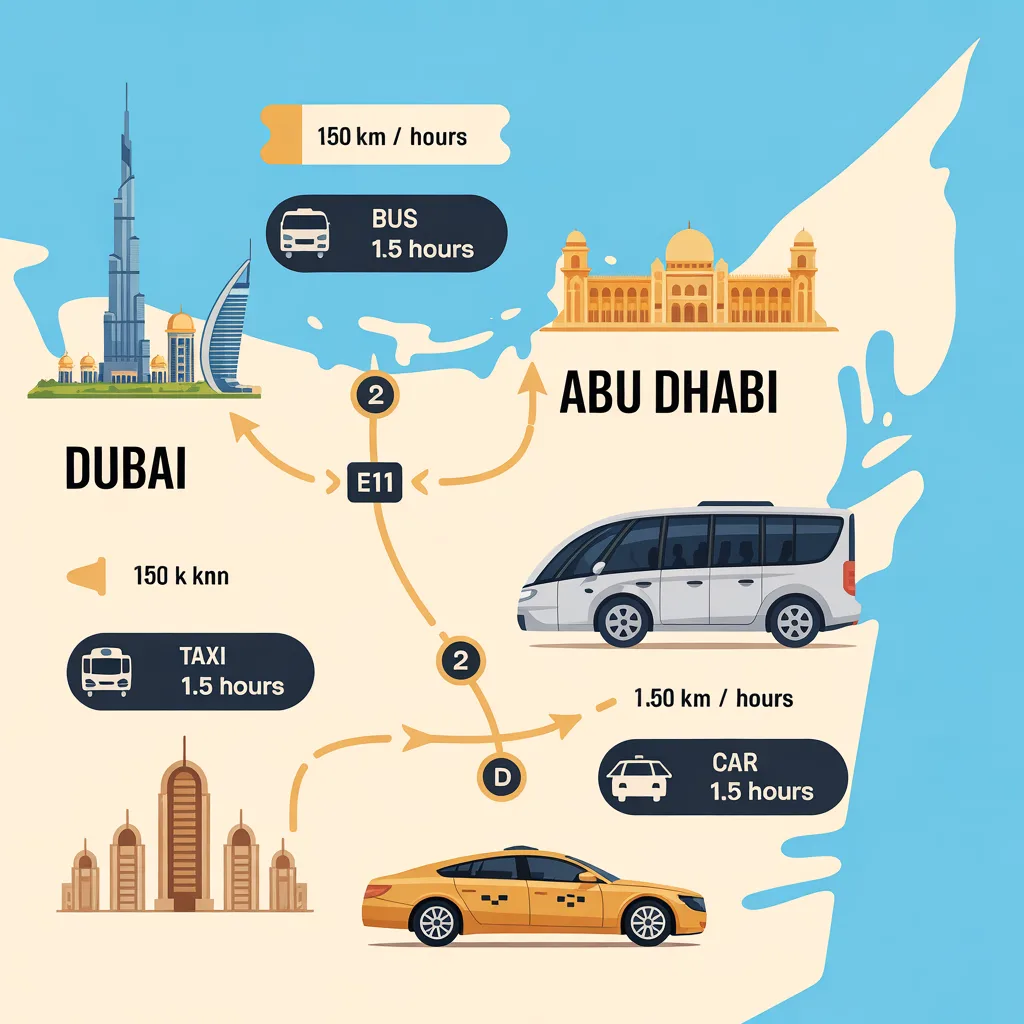
- Distance: Approximately 150 kilometers (93 miles) between city centers
- Travel Time: 1 to 2.5 hours depending on mode of transport and traffic
- Main Highway: Sheikh Zayed Road (E11) – the primary route
- Alternative Route: Emirates Road (E311) – often less congested
- Key Landmarks Along the Way: Dubai Marina, Jebel Ali, Dubai Parks and Resorts, Yas Island
Option 1: Etihad Rail (Passenger Service) – The Newest Option
The most significant development in UAE intercity travel
Overview:
Etihad Rail’s passenger service has revolutionized travel between Dubai and Abu Dhabi with modern, comfortable trains.
Stations:
- Dubai: Dubai Railway Station (Al Qusais)
- Abu Dhabi: Abu Dhabi Central Station, Khalifa City, Al Shahama
Schedule & Frequency:
- Operating Hours: 6:00 AM to 11:00 PM daily
- Frequency: Every 30-60 minutes depending on time of day
- First Train: 6:00 AM from Dubai
- Last Train: 10:30 PM from Abu Dhabi
Ticket Prices:
| Class | Off-Peak (AED) | Peak (AED) | Features |
|---|---|---|---|
| Economy | 35-50 | 45-65 | Standard seating, WiFi, power outlets |
| Business | 75-100 | 90-120 | Extra legroom, premium amenities |
| First Class | 120-150 | 140-180 | Luxury seating, enhanced service |
Peak Times: Weekends (Thursday-Saturday), holidays, morning (7-9 AM) and evening (5-7 PM) rush hours.
How to Book:
- Etihad Rail App (iOS/Android)
- Website: etihadrail.ae
- Station Counters (Dubai Railway Station, Abu Dhabi Central Station)
- Self-Service Kiosks at stations
Advantages:
- Fastest option (50-70 minutes)
- Most comfortable and modern
- Reliable timing (not affected by road traffic)
- Scenic desert views
- Eco-friendly option
Disadvantages:
- Stations may be distant from your origin/destination
- Need to arrange transport to/from stations
- Limited late-night service
Best For: Travelers prioritizing speed and comfort, business travelers, tourists wanting a unique experience.
Option 2: Intercity Buses – The Budget Choice
The most economical public transport option
RTA Bus Services:
E100 Route:
- From: Al Ghubaiba Bus Station (Bur Dubai)
- To: Abu Dhabi Central Bus Station
- Frequency: Every 20-40 minutes
- Operating Hours: 24/7
- Journey Time: 2-2.5 hours
- Fare: 25 AED one-way
E101 Route:
- From: Ibn Battuta Bus Station (near Dubai Marina)
- To: Abu Dhabi Central Bus Station
- Frequency: Every 20-30 minutes
- Operating Hours: 24/7
- Journey Time: 1.75-2.25 hours
- Fare: 25 AED one-way
E102 Route:
- From: Ibn Battuta Bus Station
- To: Al Shahama → Abu Dhabi Central Bus Station
- Frequency: Every 60 minutes
- Operating Hours: 6:00 AM to 10:00 PM
- Fare: 25 AED one-way
Bus Amenities:
- Air-conditioning
- Free WiFi (on most buses)
- Comfortable reclining seats
- Luggage compartments
- Priority seating for special needs
How to Pay:
- Nol Card (tap on when boarding)
- Cash (exact change recommended)
- Credit/Debit Card (on some buses)
Bus Station Facilities:
- Al Ghubaiba Station: Metro connection (Green Line), taxis, parking
- Ibn Battuta Station: Metro connection (Red Line), mall access, taxis
- Abu Dhabi Central Bus Station: Connections to local Abu Dhabi buses, taxis
Advantages:
- Cheapest option (25 AED)
- Frequent departures
- Comfortable coaches
- 24/7 availability on main routes
Disadvantages:
- Subject to road traffic delays
- Longer travel time
- Limited luggage space
- May require connection to reach bus station
Best For: Budget travelers, students, those with flexible schedules, environmentally conscious travelers.
Option 3: Private Car – Maximum Flexibility
Driving Yourself:
Route Options:
- Sheikh Zayed Road (E11): Most direct, but often congested
- Emirates Road (E311): Alternative, often faster during peak hours
- Al Khail Road (E44): Connects to E311, good from certain areas
Toll Gates (Salik):
- 4-5 gates each way (depending on route)
- 4 AED per gate (automatically deducted)
- Total toll cost: 16-20 AED one-way
Fuel Cost:
- Approximately 35-50 AED each way (depending on car efficiency)
Parking in Abu Dhabi:
- Street parking: 2 AED/hour (8 AM-10 PM)
- Mall parking: Often free for first few hours
- Paid parking zones: Clearly marked
Car Rental:
Daily Rental Rates:
- Economy car: 80-120 AED/day
- SUV: 150-250 AED/day
- Luxury sedan: 300-500 AED/day
Recommended Companies:
- Enterprise, Thrifty, Europcar (airport locations)
- Local agencies (often cheaper)
Advantages:
- Complete flexibility
- Door-to-door convenience
- Can explore Abu Dhabi freely
- Good for groups/families
Disadvantages:
- Traffic stress
- Parking challenges in Abu Dhabi
- Fuel and toll costs
- Need valid UAE/international license
Best For: Families, groups, those wanting to explore Abu Dhabi extensively, travelers with lots of luggage.
Option 4: Taxi & Ride-Hailing – Door-to-Door Convenience
Standard Taxis:
- Dubai Taxis (Cream-colored): Can take you to Abu Dhabi
- Meter starts: 12 AED (flag fall)
- Approximate cost: 250-350 AED one-way
- Payment: Cash or card
Careem/Uber:
- Approximate cost: 280-400 AED one-way
- Advantage: Known price upfront
- Vehicle options: Economy, Comfort, Premium
- Booking: App-based, often cleaner cars
Specialized Services:
Abu Dhabi Taxi App:
- Can book for return journey
- Often slightly cheaper than Dubai taxis for Abu Dhabi trips
Luxury Transfers:
- Companies: Alpha, Knightsbridge
- Cost: 400-800 AED one-way
- Vehicles: Mercedes, BMW, luxury SUVs
- Service: Professional drivers, water, newspapers
Taxi Stand Locations in Dubai:
- All hotels
- Shopping malls
- Metro stations
- Designated taxi ranks throughout city
Advantages:
- Door-to-door service
- No parking worries
- Can work/relax during journey
- Available 24/7
Disadvantages:
- Most expensive option
- Subject to traffic delays
- Potential surge pricing during peak times
Best For: Business travelers, special occasions, those with heavy luggage, time-sensitive trips.
Option 5: Intercity Taxis (Shared) – The Middle Ground
Dubai-Abu Dhabi Shared Taxis:
- Location: Al Ghubaiba Bus Station area
- Operation: Fill 4-passenger cars
- Cost per person: 50-60 AED
- Departure: When car is full
- Travel time: 1.5-2 hours
How It Works:
- Go to designated shared taxi area
- Driver quotes price per seat
- Wait for other passengers (usually 10-30 minutes)
- Pay when boarding
Advantages:
- Faster than bus
- Cheaper than private taxi
- Direct to Abu Dhabi city
Disadvantages:
- Wait time for car to fill
- Less comfortable than private taxi
- Limited luggage space
- Cash only usually
Best For: Solo travelers, budget-conscious but time-sensitive trips.
Option 6: Airport Transfers – For Flight Connections
Between Airports:
- From DXB to AUH: Special consideration if catching connecting flight
- Options: Taxi (300-400 AED, 1.5 hours) or rental car
- Note: Allow 3+ hours between flights for this transfer
Hotel Airport Transfer Services:
- Many hotels in both cities offer transfer services
- Often more expensive than taxis
- Pre-booking required
Option 7: Chartered Buses & Tours – For Groups
Tour Companies:
- Full-day Abu Dhabi tours: 200-400 AED per person
- Includes: Transportation, guide, entry to attractions
- Companies: Arabian Adventures, Rayna Tours
- Pick-up: From major hotels in Dubai
Private Charter:
- Mini-bus (15-20 seats): 800-1,500 AED for round trip
- Large coach (50 seats): 2,000-4,000 AED for round trip
- Includes: Driver, fuel, insurance
Best For: Tourist groups, corporate events, school trips, large families.
Detailed Cost Comparison Table
| Mode of Transport | Cost (One Way) | Travel Time | Best For | Booking Method |
|---|---|---|---|---|
| Etihad Rail | 35-180 AED | 50-70 min | Speed, comfort, reliability | App, website, station |
| RTA Bus | 25 AED | 2-2.5 hours | Budget travelers, no rush | Bus station, Nol card |
| Private Car | 60-150 AED* | 1.5-2 hours | Families, flexibility | Rental company |
| Taxi (Private) | 250-350 AED | 1.5-2 hours | Business, convenience | Street hail, app |
| Careem/Uber | 280-400 AED | 1.5-2 hours | Comfort, app convenience | Mobile app |
| Shared Taxi | 50-60 AED/person | 1.5-2 hours | Solo budget travelers | Taxi stations |
| Charter Bus | Varies by group | 2-2.5 hours | Large groups, tours | Tour companies |
*Private car cost includes fuel and tolls for one-way trip.
Timing Your Journey: When to Travel
Best Times to Avoid Traffic:
- Weekdays: 10:00 AM to 3:00 PM
- Weekends: Friday mornings, Sunday evenings
- Avoid: Thursday evenings, Friday afternoons, Sunday mornings
Peak Traffic Times:
- Morning Rush: 7:00-9:30 AM (toward Abu Dhabi)
- Evening Rush: 5:00-7:30 PM (toward Dubai)
- Weekend Traffic: Friday afternoons returning to Dubai
Seasonal Considerations:
- Winter (Nov-Mar): More tourists, but pleasant weather
- Summer (Jun-Sep): Less traffic, but extreme heat
- Ramadan: Traffic patterns change, check prayer times
- Holidays: Significant congestion around Eid, National Day
Border Crossing: What You Need to Know
Between Emirates:
- No passport or ID checks
- No customs between Dubai and Abu Dhabi
- Same country, seamless travel
Important Notes:
- Speed limits change: Dubai (140 km/h) → Abu Dhabi (160 km/h on some highways)
- Traffic fines: Shared system between emirates
- Emergency number: 999 in both emirates
- Fuel prices: Slightly cheaper in Abu Dhabi
Luggage Considerations by Transport Mode
Buses:
- Allowance: One large suitcase + carry-on
- Storage: Under-bus compartments
- Tip: Arrive early for best luggage space
Trains:
- Allowance: Generous, dedicated racks
- Security: Keep valuables with you
- Accessibility: Easy loading/unloading
Taxis/Cars:
- Capacity: Varies by vehicle type
- SUVs/Tourist taxis: Best for lots of luggage
- Small cars: Limited trunk space
Accessibility Options
For Travelers with Disabilities:
- Buses: Wheelchair ramps on most intercity buses
- Trains: Full accessibility, dedicated spaces
- Taxis: Special needs taxis available (book in advance)
- Stations: Elevators, tactile paving, accessible toilets
Service Animals:
- Allowed on public transport with documentation
- Advance notice recommended for trains
Technology to Enhance Your Journey
Essential Apps:
- Google Maps/Waze: Real-time traffic, alternative routes
- S’hail (RTA app): Bus schedules, Nol card management
- Etihad Rail App: Train schedules, booking
- Careem/Uber: Ride-hailing
- Darb (Abu Dhabi): Traffic, parking, toll information
- Dubai Police: Traffic fines, accident reporting
Useful Websites:
- woqod.gov.qa: Fuel prices (for drivers)
- salik.gov.ae: Toll balance and trips
- darb.ae: Abu Dhabi road conditions
Money-Saving Tips and Strategies
For Regular Commuters:
- Train monthly pass: 20-30% savings for daily travelers
- Bus weekly pass: Available for frequent bus users
- Carpooling: Dubai-Abu Dhabi carpool groups on Facebook
- Off-peak travel: Saves time and reduces stress
For Tourists:
- Combined tickets: Some tour packages include transport + attractions
- Group rates: 4+ people often cheaper by taxi than individual bus/train tickets
- Advance booking: Train tickets cheaper when booked early
For Business Travelers:
- Corporate accounts: With taxi companies for better rates
- Lounge access: Business class train includes lounge
- Flexible timing: Avoid peak hours to save time
Safety Considerations
Road Safety:
- Speed cameras: Numerous on E11 and E311
- Fog warnings: Common in winter mornings
- Desert crossings: Be prepared for sudden sandstorms
Personal Safety:
- Public transport: Generally very safe
- Taxis: Use licensed companies only
- Valuables: Keep secure, especially on buses
Health Considerations:
- Hydration: Essential, especially in summer
- Medication: Carry if needed (no border checks)
- COVID measures: Check current requirements
Making the Decision: Which Option Is Right For You?
Choose TRAIN if:
- You value speed and comfort
- You’re traveling during peak traffic hours
- You want a modern, scenic experience
- Your origin/destination is near train stations
Choose BUS if:
- Budget is your primary concern
- You have flexible timing
- You’re traveling solo or as a couple
- You’re starting from near Ibn Battuta or Al Ghubaiba
Choose PRIVATE CAR if:
- You’re traveling with family/group
- You want to explore Abu Dhabi extensively
- You have lots of luggage
- You value maximum flexibility
Choose TAXI/RIDE-HAIL if:
- You need door-to-door service
- Time is more important than money
- You’re traveling for business
- You have heavy luggage
Choose SHARED TAXI if:
- You’re a solo traveler
- You want something faster than bus but cheaper than private taxi
- You’re near Al Ghubaiba station
- You don’t mind waiting for other passengers
Special Scenarios and Solutions
Same-Day Return:
- Best option: Train (fastest round trip)
- Alternative: Early bus there, late train back
- Cost-saving: Off-peak travel in both directions
Late Night/Early Morning Travel:
- Buses: Run 24/7 on main routes
- Taxis: Always available but more expensive at night
- Trains: Limited to 11:00 PM last departure
With Children:
- Private car: Most convenient for families
- Train: Spacious, comfortable for children
- Buses: Less ideal with young children
With Pets:
- Private car: Only option for pets
- Public transport: Service animals only
During Events (F1, Concerts):
- Book early: Transport fills quickly
- Consider staying overnight: Avoid return traffic
- Event shuttles: Sometimes available from Dubai
Environmental Impact Comparison
Carbon Footprint:
- Train: Lowest per passenger
- Bus: Low, especially when full
- Carpool (3+ in car): Moderate
- Single-occupancy car: Highest
- Taxi: Similar to single-occupancy car
Sustainable Choice:
For environmentally conscious travelers, the train is clearly the best option, followed by bus or carpooling.
Future Developments
Planned Improvements:
- More train stations in both cities
- Increased frequency to every 20 minutes during peak
- Night services being considered
- Integrated ticketing with Dubai Metro/Abu Dhabi buses
Infrastructure Projects:
- Road expansions on E11 and E311
- Smart traffic systems to reduce congestion
- Additional bus routes being planned
Your Personal Journey Planner
Step 1: Assess Your Needs
- Budget: How much can you spend?
- Time: How quickly do you need to travel?
- Comfort: What level of comfort do you require?
- Luggage: How much are you carrying?
- Group size: How many people?
Step 2: Check Current Conditions
- Traffic: Use Google Maps/Waze
- Weather: Check for fog, rain, or sandstorms
- Events: Any major events in either city?
- Time of day: Peak or off-peak?
Step 3: Book/Budget Accordingly
- Advance booking: For trains, tours, rentals
- Budget buffer: For unexpected costs
- Contingency plan: For delays
Step 4: Prepare for the Journey
- Tickets: Downloaded or printed
- Documents: ID, license if driving
- Essentials: Water, snacks, charger
- Entertainment: For longer journeys
Step 5: Enjoy the Trip
- Scenery: Desert landscapes, city skylines
- Experience: Each mode offers different perspectives
- Arrival: Plan what you’ll do upon arrival
Conclusion: Mastering the Dubai-Abu Dhabi Journey
Understanding how to go from Abu Dhabi to Dubai is about matching the right transportation to your specific needs, budget, and circumstances. The UAE’s continuous infrastructure improvements, particularly the revolutionary Etihad Rail service, have transformed what was once a challenging journey into a range of convenient options.
Whether you choose the speed of the train, the economy of the bus, the flexibility of a private car, or the convenience of a taxi, each option offers its own advantages. The key is planning ahead, considering all factors, and choosing what works best for your particular situation.
With this comprehensive guide, you’re equipped to make informed decisions, save money where possible, save time when needed, and travel between these two incredible cities with confidence and ease. The journey itself can now be as enjoyable as the destination.
