
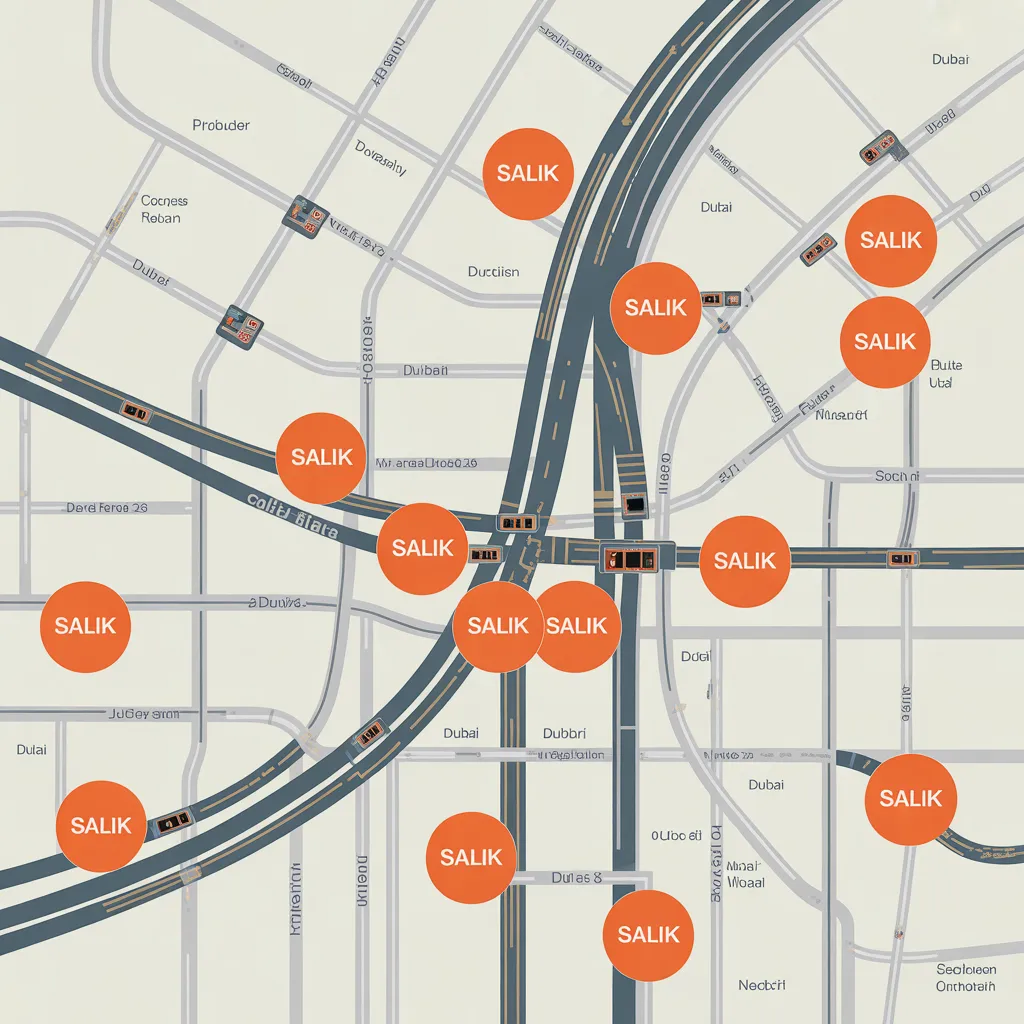
If you’re searching for a Dubai Salik map, you’re likely a new driver in the city, a visitor renting a car, or a resident planning a new route and need to understand where you’ll encounter toll charges. Navigating Dubai’s extensive and efficient road network requires more than just a GPS; it requires an understanding of the Salik toll system. Salik, which means “clear” or “open road” in Arabic, is designed to manage traffic flow and reduce congestion on key highways. But without a clear visual guide and knowledge of how it works, unexpected Salik charges can add up quickly, leaving you confused by your bill. This comprehensive 1500-word guide provides more than just a map; it offers a complete strategic overview of the Salik system. We will detail every current toll gate location, explain how charges are applied, provide step-by-step registration instructions, and share expert tips to help you plan your journeys efficiently and cost-effectively in 2025. Consider this your indispensable manual to mastering Dubai’s roads.
Understanding the Salik System: More Than Just Tolls
Before we dive into the map, it’s crucial to grasp the fundamentals of how Salik operates. Salik is a fully electronic, cashless toll collection system. There are no toll booths where you stop to pay. Instead, overhead gantries equipped with sensors and cameras are installed across key bridges and intersections on Dubai’s major highways. Each time a vehicle with a registered Salik tag passes under an active gantry during operational hours, a fee of AED 4 is automatically deducted from the user’s prepaid account. The system uses Radio-Frequency Identification (RFID) technology, meaning your vehicle’s tag is read as you pass through at normal highway speeds. The primary goals are to manage peak-hour traffic congestion by encouraging the use of alternative routes and public transport, and to generate revenue for further road infrastructure development. For drivers, this means seamless travel but also a need for awareness and account management.
The Complete 2025 Dubai Salik Map: Gate-by-Gate Breakdown
Here is the definitive list of all operational Salik toll gates as of 2024, organized by their primary highway corridor. Important Note: Charges apply 24 hours a day, 7 days a week.
Sheikh Zayed Road (E11) Corridor – The City’s Backbone
This north-south artery has the highest concentration of Salik gates.
- Al Barsha Toll Gate (Gate #1):
- Location: On Sheikh Zayed Road (E11), between the interchanges for Al Safa Street (Exit 39) and Hessa Street (Exit 37). It spans the road near the Mall of the Emirates.
- Direction: Charges apply in BOTH DIRECTIONS.
- Strategic Impact: This is a key gate for traffic to/from Dubai Marina, JLT, and the southern coastal communities. It’s almost unavoidable for commuters living in these areas.
- Al Garhoud Toll Gate (Gate #2):
- Location: On Sheikh Zayed Road (E11), over the Al Garhoud Bridge, near the Dubai Creek.
- Direction: Charges apply in BOTH DIRECTIONS.
- Strategic Impact: This gate controls traffic flow between Deira/Bur Dubai and the newer developments along Sheikh Zayed Road (like Downtown, Business Bay, and further south). It’s a major crossing point over the Creek.
- Al Maktoum Bridge Toll Gate (Gate #3):
- Location: On the Al Maktoum Bridge, another key crossing of the Dubai Creek, parallel to Al Garhoud Bridge.
- Direction: Charges apply in BOTH DIRECTIONS.
- Strategic Impact: Serves as an alternative to Al Garhoud Bridge, connecting Bur Dubai and Deira. Both creek crossings are tolled.
- Airport Tunnel Toll Gate (Gate #5):
- Location: Within the Airport Tunnel on Sheikh Zayed Road (E11), which passes underneath the runway of Dubai International Airport (DXB).
- Direction: Charges apply in BOTH DIRECTIONS.
- Strategic Impact: Critical for traffic going to or from the airport terminals and connecting Deira to areas like Jebel Ali. There is no free alternative route that avoids this tunnel.
Sheikh Mohammed bin Zayed Road (E311) Corridor – The Bypass Route
This alternative highway running parallel to E11 also has toll gates to manage cross-city traffic.
- Jebel Ali Toll Gate (Gate #4):
- Location: On Sheikh Mohammed bin Zayed Road (E311), near the intersection with Sheikh Zayed Road (E11) in the Jebel Ali Industrial Area.
- Direction: Charges apply in BOTH DIRECTIONS.
- Strategic Impact: Affects traffic between Abu Dhabi and the northern emirates, as well as those using E311 to bypass central Dubai congestion.
- Academic City Toll Gate (Gate #6):
- Location: On Sheikh Mohammed bin Zayed Road (E311), in the area near Dubai Academic City and International City.
- Direction: Charges apply in BOTH DIRECTIONS.
- Strategic Impact: Catches traffic to/from the growing residential and educational communities in the Al Warqa and Silicon Oasis areas.
Newest Additions: Al Shindagha Corridor & Floating Bridge
- Al Shindagha Toll Gate (Gate #7):
- Location: Part of the massive Al Shindagha Corridor project. This gate is on the newly constructed elevated ramp leading to the Shindagha Tunnel.
- Direction: Charges apply only on the northbound approach to the Shindagha Tunnel (heading from Port Rashid/Business Bay towards Deira).
- Strategic Impact: This is a crucial gate for understanding. The Shindagha Tunnel itself is currently FREE. The toll is only levied on the specific new elevated approach roads. Using the older surface streets to access the tunnel may allow you to avoid this charge.
- Floating Bridge Toll Gate:
- Location: On the Floating Bridge (Al Maktoum Bridge replacement during its refurbishment). It has been made a permanent toll gate.
- Direction: Charges apply in BOTH DIRECTIONS.
- Strategic Impact: Provides another, albeit tolled, Creek crossing option alongside Al Garhoud and Al Maktoum Bridges.
Visualizing Your Route: How to Use a Salik Map Strategically
A static list is helpful, but strategic planning is key. Here’s how to use this map information effectively:
- Identify Your “Choke Points”: Look at your regular commute. Do you need to cross the Creek? Do you live south of Al Barsha and work in Downtown? Your route will likely pass through 1-2 mandatory gates.
- Explore Parallel Alternatives: For gates like Al Barsha, consider parallel roads like Al Khail Road (E44) or Umm Suqeim Street as potential free alternatives, though they may be slower or have traffic lights.
- Creek Crossing Strategy: All main Creek crossings (Al Garhoud, Al Maktoum, Floating Bridge) are tolled. The only free crossing points for light vehicles are the Business Bay Crossing (near Downtown) and the Infinity Bridge (in the Al Shindagha area, but note the tolled approach ramps). The Al Shindagha Tunnel is also free, but watch for the tolled approach.
- Use Technology: Navigation apps like Google Maps and Waze are essential. They not only show you Salik gates on your route but can also be set to “Avoid Tolls” in their settings. This will reroute you via free roads, though the journey may take longer.
The Financials: Charges, Registration, and Account Management
- Per-Pass Charge: AED 4.00 for each crossing of an active gate.
- Daily Cap: There is NO daily or monthly cap on Salik charges. Each pass costs AED 4.
- Account Registration: You must have a Salik account and a tag sticker affixed to your vehicle’s windshield. Tags can be purchased for AED 100 from official centers, RTA customer happiness centers, or authorized retailers. This AED 100 includes AED 50 initial credit for your account.
- Topping Up: You can top up your Salik account via:
- Salik Website or App: The most convenient method.
- ATM Machines: Of participating banks (ENBD, ADCB, etc.).
- SMS: For registered UAE mobile numbers.
- Authorized Stores: Like ENOC/EPPCO petrol stations.
- Low Balance Consequences: If your account balance hits zero, you will still be able to pass through gates, but each crossing will incur an additional AED 10 administrative fee per trip, on top of the AED 4 toll. These fines will be accumulated and must be paid when you next top up.
Special Scenarios & Frequently Asked Questions (FAQ)
Q1: I am renting a car in Dubai. How does Salik work for me?
A: The rental car will already have a Salik tag. The rental company will pay the tolls as they are incurred and will then charge your registered credit card for the total amount at the end of your rental period, often adding an administrative fee (e.g., AED 5 per day or per transaction). It’s wise to ask about their specific Salik policy when you pick up the car.
Q2: What happens if I drive a friend’s car or a newly purchased car without a tag?
A: The Salik system uses camera technology to read license plates. If a vehicle without an active tag passes under a gantry, the system will capture the plate number and issue a violation notice. The registered owner will receive a fine of AED 50 for the first day (for each gate crossed), and AED 100 for each subsequent day until the violation is settled and a tag is registered.
Q3: Are there any exemptions from Salik charges?
A: Exemptions are very limited and typically apply only to official government vehicles with specific classifications. Emergency vehicles (ambulances, police, civil defense) are exempt. There is no general exemption for residents of specific areas, electric vehicles, or during weekends.
Q4: How can I check my Salik balance and trip history?
A: You can do this easily through the Salik website (www.salik.gov.ae) or the Salik mobile app by logging into your account. You will see a detailed statement of all crossings and charges.
Q5: Is there a way to get an alert when my balance is low?
A: Yes, you can activate SMS notifications through your Salik account. The system can send you an alert when your balance falls below a threshold you set (e.g., AED 20).
Pro Tips to Minimize Your Salik Expenditure
- Plan Your Trips: Consolidate errands to avoid multiple cross-city trips in one day.
- Embrace Alternative Routes: Learn and use the parallel, non-tolled roads like Al Khail Road (E44), Emirates Road (E611), and Dubai-Al Ain Road (E66) for east-west travel.
- Use the Dubai Metro: For commutes to areas like Downtown, Business Bay, or the Marina, the Metro is often faster and always cheaper than driving and paying Salik.
- Carpool: Sharing a ride means splitting the cost of Salik (and fuel) with others.
- Monitor Your Account Regularly: Set a monthly reminder to check your Salik statement online to track your spending and top up before you incur fines.
Conclusion: Driving Smart in Dubai with Confidence
Understanding the Dubai Salik map and system is a fundamental part of being a savvy driver in the emirate. It’s not just about paying tolls; it’s about making informed choices that can save you time and money. By memorizing the key gate locations—particularly the Creek crossings and the Al Barsha gate—you can pre-plan your routes. By leveraging technology (apps with “avoid tolls” settings) and considering free alternative arteries, you can maintain control over your transportation budget. Remember to register your vehicle promptly, keep your account topped up, and make use of the account management tools provided. With the knowledge from this guide, you can navigate Dubai’s impressive road network efficiently, predict your costs accurately, and focus on enjoying the journey in this dynamic city. Drive safely and smartly
