
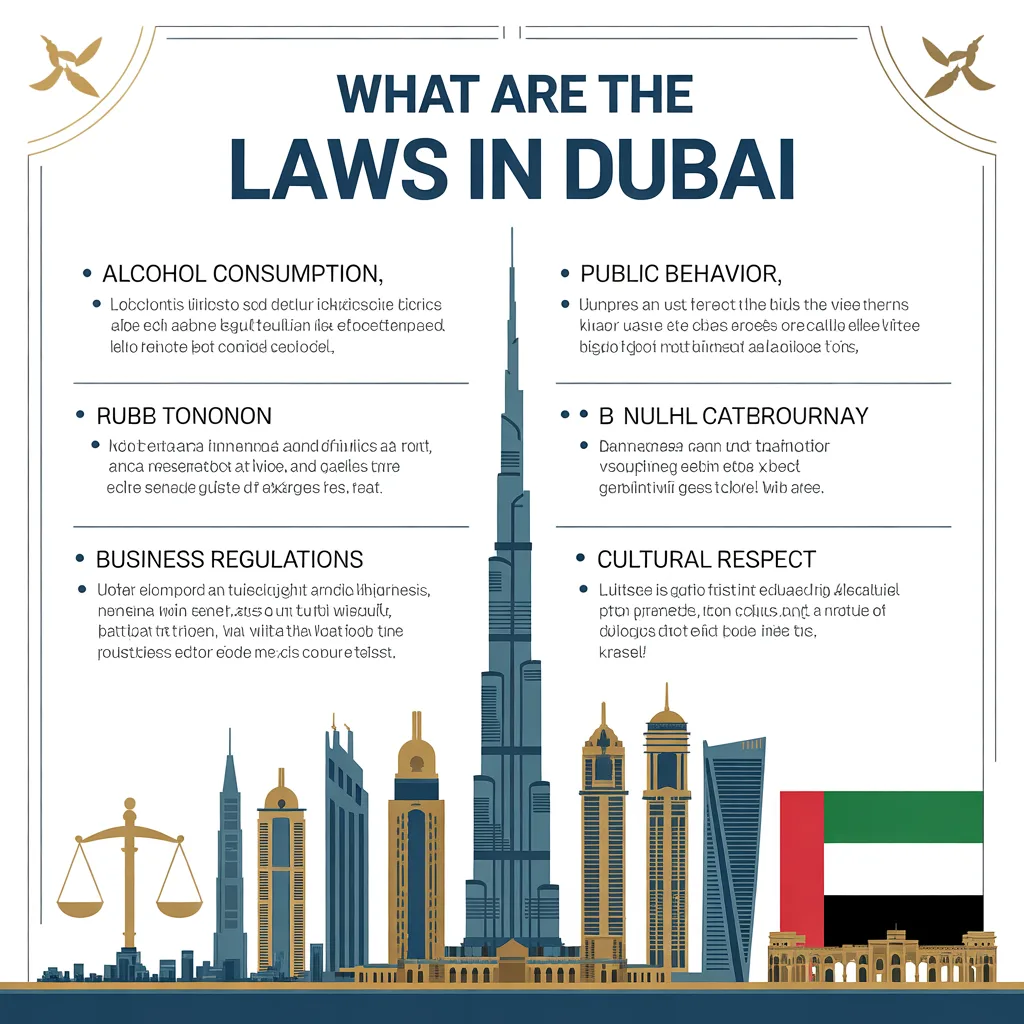
Introduction: Understanding Dubai’s Legal Landscape
Are you planning a visit, moving for work, or already living in Dubai? If so, you’ve probably wondered, “What are the laws in Dubai?” that I need to know to stay safe and avoid trouble. Dubai is a global, modern city known for its tolerance and hospitality—but it also operates under UAE federal laws influenced by local customs and Islamic principles. This unique blend means that some behaviors common in other countries can lead to fines, deportation, or even jail time here if you’re unaware. Whether it’s about drinking alcohol, dressing modestly, using social media, or conducting business, knowing the rules isn’t just useful—it’s essential. In this comprehensive guide, we break down Dubai laws in clear, practical terms so you can live, work, or travel with confidence and respect.
Dubai’s Legal System: A Quick Overview
Dubai is part of the United Arab Emirates (UAE), which follows a dual legal system:
- Federal laws apply across all seven emirates.
- Local decrees specific to Dubai may add extra regulations.
The UAE Constitution is the supreme law, and the court system includes civil, criminal, and Sharia courts. For most day-to-day matters affecting expats and tourists, civil and criminal laws are relevant, while Sharia courts typically handle family and personal status cases for Muslims.
Important: Ignorance of the law is not considered a valid defense in Dubai.
Social & Public Behavior Laws in Dubai
Dress Code
- Be modest in public areas like malls, souks, and government offices.
- Swimwear is acceptable at beaches and pools, but cover up when leaving.
- While not strictly enforced everywhere for tourists, respectful dressing avoids unwanted attention.
Public Displays of Affection (PDA)
- Holding hands is generally tolerated for married couples.
- Kissing, hugging intimately, or any overt romantic gestures in public can lead to fines or arrest.
- Important: Same-sex PDA is illegal and can result in severe penalties.
Public Conduct & Rudeness
- Swearing, making rude gestures, or raising your voice in anger can be considered criminal acts (“offending public decency”).
- Filming or photographing people without permission—especially locals or government buildings—is prohibited and can lead to detention.
Alcohol Laws in Dubai
Legal Drinking Age & Requirements
- Legal drinking age: 21 years.
- Alcohol can only be consumed in licensed venues (hotels, clubs, certain restaurants) or at home with a personal alcohol license for residents.
Alcohol License for Residents
- Non-Muslim residents can apply for an alcohol license through African + Eastern or Maritime and Mercantile International (MMI).
- Requires a residency visa, NOC from employer, and valid UAE passport copy.
- License holders can purchase alcohol from designated stores for home consumption.
Tourists & Alcohol
- Tourists can drink in licensed venues without a license.
- Do NOT drink in public places (parks, beaches, streets)—this is illegal.
- Drinking and driving has zero tolerance—any alcohol in the blood can lead to heavy fines, jail, and deportation.
Ramadan Laws & Etiquette
During the holy month of Ramadan:
- No eating, drinking, or smoking in public from sunrise to sunset, even for non-Muslims.
- Restaurants and cafes operate with screened or closed dining areas until sunset.
- Dress more conservatively than usual.
- Playing loud music in public is discouraged.
Violating Ramadan rules can result in fines or community service.
Laws Regarding Relationships & Cohabitation
Marriage & Cohabitation
- Unmarried couples living together is now decriminalized under UAE federal law updates (2020 onwards), but some conservative landlords or areas may still object.
- However, pregnancy outside marriage can still lead to legal issues if reported.
- Same-sex relationships are illegal under UAE law.
Cyber Laws & Social Media
- Insulting or defaming someone online is a criminal offence (Cybercrime Law).
- Spreading fake news or offending state symbols can lead to imprisonment.
- Be cautious when discussing religion, politics, or the ruling family on social media.
Business & Employment Laws in Dubai
Employment Contracts
- Must be registered with the Ministry of Human Resources and Emiratisation (MOHRE).
- Employees are entitled to end-of-service benefits, paid leave, and timely salary payments.
Sponsorship System (Kafala Update)
- The traditional kafala system has been reformed; employees can now change jobs more easily without sponsor consent under certain conditions.
- A notice period (1–3 months) must be served when resigning.
Business Setup & Commercial Laws
- Free zones offer 100% foreign ownership and tax benefits.
- Mainland companies may require a UAE national as a local partner (51% ownership).
- Intellectual property must be registered for protection.
Drug Laws: Zero Tolerance
Dubai has extremely strict drug laws:
- Possession of even trace amounts can lead to minimum 4 years imprisonment.
- Some prescription drugs legal elsewhere (e.g., codeine, ADHD medication) are controlled substances in the UAE—always check before traveling.
- Drug testing can be done upon entry if suspected; positive tests lead to arrest.
Tip: Carry a doctor’s prescription and medical report for any medication you bring.
Traffic & Driving Laws in Dubai
- Seat belts are mandatory for all passengers.
- Using a mobile phone while driving is illegal unless hands-free.
- Speed limits are strictly enforced with radars; fines start at AED 600.
- Drinking and driving = severe penalties including imprisonment and deportation.
- Salik toll gates must be paid; unpaid tolls accumulate fines.
Laws on Religious Respect & Blasphemy
- Insulting Islam or any religion is a serious criminal offence.
- During Ramadan and prayer times, be respectful—avoid loud behavior near mosques.
- Missionary activities by non-Muslims are illegal.
Women’s Rights & Protection Laws
- Women have equal rights in education, employment, and business.
- Harassment (verbal, physical, online) is illegal and punishable.
- Special police units and courts address violence against women.
Consumer & Tenancy Laws
Consumer Protection
- Products must meet standards; faulty goods can be returned.
- Consumer rights are enforced by the Department of Economic Development (DED).
Rental Laws (Dubai)
- Rental contracts are regulated by the Real Estate Regulatory Agency (RERA).
- Rent increases are capped and must follow RERA’s rental index.
- Eviction notices must be given 12 months in advance under specific conditions.
Legal Consequences & Police Enforcement
Dubai police are professional, helpful, but strict.
- Minor offences: fines.
- Serious crimes: imprisonment + deportation for expats.
- Always carry ID (passport for tourists, Emirates ID for residents).
If arrested:
- You have the right to call your embassy.
- Do not sign documents you don’t understand; request a translator.
Common Misconceptions About Dubai Laws
Myth: Dancing is illegal.
Fact: Dancing is allowed in licensed venues, not in public places.
Myth: You can’t drink at all.
Fact: You can—in licensed venues or at home with a license.
Myth: Strict dress codes are enforced everywhere.
Fact: Beaches, pools, and resorts are relaxed; malls and older areas prefer modesty.
FAQs: Dubai Laws in Simple Terms
Q1: Can I share an apartment with my unmarried partner?
Yes, under updated laws it’s no longer a crime, but discretion is advised in conservative communities.
Q2: Is vaping legal in Dubai?
Yes, but only in designated smoking areas—same as cigarettes.
Q3: Are there fines for littering?
Yes—up to AED 1,000 for littering in public places.
Q4: Can I buy pork in Dubai?
Yes, in designated sections of supermarkets like Spinneys or Waitrose (usually separated and discreet).
Q5: What if I accidentally bounce a cheque?
Cheque fraud is taken seriously; it can lead to a travel ban or criminal case. Settle debts quickly.
Q6: Can I bring my prescription medication?
Yes, with an official prescription and preferably a letter from your doctor. Check the UAE’s MoH list first.
Q7: Is swearing on WhatsApp illegal?
Yes—digital communication is covered under cybercrime laws. Avoid offensive language.
Tips for Staying on the Right Side of Dubai Laws
- When in doubt, choose modest and respectful behavior.
- Never argue with police officers—comply first, seek legal advice later.
- Keep documents handy—passport copy, visa, Emirates ID, driving license.
- Follow local customs during Ramadan and religious holidays.
- Use licensed venues for alcohol and never drive after drinking.
Conclusion: Respect and Awareness Go a Long Way
Understanding what are the laws in Dubai helps you enjoy everything this vibrant city offers while staying safe and respectful. Most laws are straightforward and meant to uphold public order, safety, and cultural values. By dressing modestly when required, drinking responsibly in licensed areas, avoiding public displays of affection, and being mindful during Ramadan, you’ll find Dubai welcoming and secure. When in doubt, remember this simple rule: respect local culture, follow public guidelines, and when unsure, ask. Dubai is a city built on diversity and hospitality—knowing the rules ensures you experience the best of it.
Whether you’re visiting for a week or settling for years, let this guide be your first step toward a confident and law-abiding stay in one of the world’s most dynamic cities.
