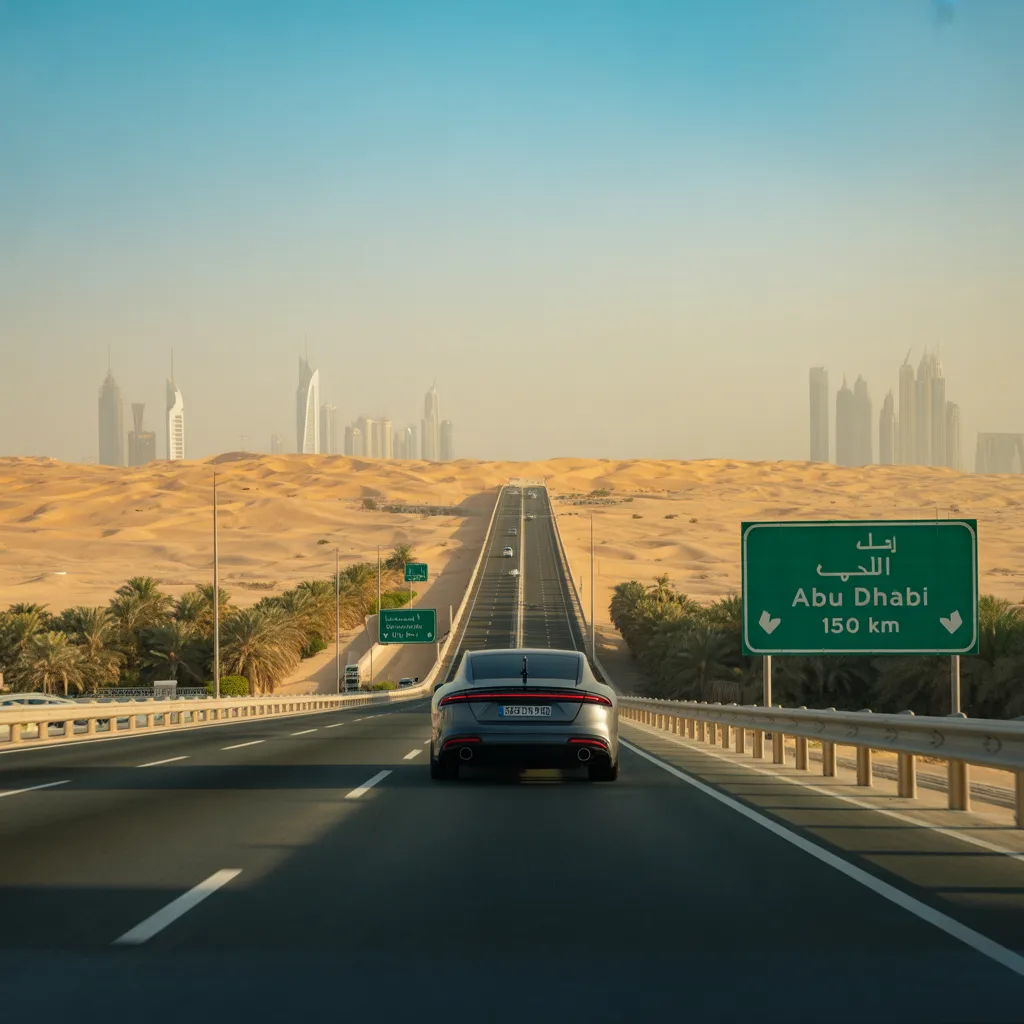
Planning to drive from Dubai to Abu Dhabi by car? Whether you’re commuting for work, visiting family, or exploring the UAE’s capital, this comprehensive guide covers everything you need to know about the journey. From route options and toll costs to driving tips and must-see stops, here’s your complete roadmap for a smooth drive from Dubai to Abu Dhabi.
Quick Facts: Dubai to Abu Dhabi at a Glance
Before we dive into details, here’s what you need to know:
- Distance: Approximately 140-160 km (depending on starting/ending points)
- Driving Time: 1.5 to 2 hours (without traffic)
- Best Route: E11/Sheikh Zayed Road (E11) or E311/Sheikh Mohammed Bin Zayed Road
- Toll Roads: Yes (Salik in Dubai, Darb in Abu Dhabi)
- Border Crossing: No passport control (same country)
- Speed Limits: 100-140 km/h on highways
- Fuel: Plenty of stations along the route
Route Options: Which Road Should You Take?
Route 1: E11/Sheikh Zayed Road (The Main Highway)
Distance: Approximately 140 km
Travel Time: 1.5-2 hours (normal conditions)
Lanes: 6-8 lanes each direction
Condition: Excellent, well-maintained
Best For: First-time drivers, direct route to central Abu Dhabi
Key Landmarks Along E11:
- Starts from Dubai Marina/Jumeirah area
- Passes through Jebel Ali
- Crosses into Abu Dhabi emirate
- Ends near Abu Dhabi Corniche
Pros:
- Most direct route
- Scenic views (desert on one side, developments on the other)
- Plenty of service stations
- Easy navigation
Cons:
- Can get congested near Dubai and Abu Dhabi city limits
- More trucks and commercial vehicles
Route 2: E311/Sheikh Mohammed Bin Zayed Road
Distance: Approximately 150 km
Travel Time: 1.5-2 hours
Lanes: 6 lanes each direction
Best For: Avoiding Dubai traffic, accessing Abu Dhabi suburbs
Key Features:
- Less congested than E11
- Better for reaching Yas Island, Saadiyat Island, or Khalifa City
- Fewer traffic lights
- Generally faster during peak hours
Pros:
- Less traffic
- Smoother flow
- Better for specific Abu Dhabi destinations
Cons:
- Slightly longer distance
- Fewer immediate service stations
Route 3: E611/Emirates Road (Alternative Route)
Distance: Approximately 160 km
Travel Time: 2-2.5 hours
Best For: Avoiding all city traffic, scenic desert drive
When to Use This Route:
- During major events causing congestion on E11/E311
- If starting from Northern Emirates (Sharjah, Ajman)
- For a more relaxed, scenic drive
Real-Time Travel Times (What to Actually Expect)
| Time of Day | E11 Travel Time | E311 Travel Time | Traffic Conditions |
|---|---|---|---|
| Early Morning (5-7 AM) | 1.5 hours | 1.5 hours | Light traffic, smooth |
| Morning Rush (7-9 AM) | 2-2.5 hours | 1.75-2 hours | Heavy near cities |
| Mid-Day (10 AM-3 PM) | 1.5-2 hours | 1.5-1.75 hours | Moderate |
| Evening Rush (4-7 PM) | 2.5-3 hours | 2-2.5 hours | Very heavy |
| Late Evening (8 PM+) | 1.5 hours | 1.5 hours | Light |
| Friday Afternoon | 2-3 hours | 1.75-2.5 hours | Variable (family travel) |
Pro Tip: Use Google Maps or Waze for real-time traffic updates. The apps are remarkably accurate for UAE traffic conditions.
Toll Roads: What You’ll Pay (Salik & Darb)
Dubai Toll Gates (Salik)
You’ll pass through these if using E11:
- Al Barsha Toll Gate (near Mall of the Emirates)
- Cost: 4 AED
- Timing: Anytime you pass through
- Mall of the Emirates Toll Gate
- Cost: 4 AED
- Timing: Anytime you pass through
Note: If taking E311, you may avoid some Salik gates depending on your starting point.
Abu Dhabi Toll Gates (Darb)
Implemented in recent years:
- Bridge Toll Gate (Main Abu Dhabi entry)
- Cost: 4 AED
- Timing: Peak hours only (7-9 AM & 5-7 PM, Saturday-Thursday)
- Ghantoot Toll Gate (Border area)
- Cost: 4 AED
- Timing: Peak hours only (7-9 AM & 5-7 PM, Saturday-Thursday)
Important: Abu Dhabi tolls are only charged during peak hours on weekdays. No charges on Fridays or outside peak times.
Total Toll Cost Estimate
- Minimum (off-peak, smart routing): 8-12 AED one way
- Typical (peak hours): 16-20 AED one way
- Maximum (all tolls, peak hours): 24 AED one way
Payment: Automatic via Salik tag (Dubai) and Darb tag (Abu Dhabi). Rental cars have these installed.
Fuel Costs and Stations
Fuel Requirements
- Distance: 140-160 km one way
- Average Car Fuel Consumption: 8-10 liters per 100 km
- Fuel Needed One Way: 11-16 liters
- Cost at Current Prices (95 Octane): 30-45 AED one way
Recommended Fuel Stations Along the Route
On E11:
- ENOC Station near Jebel Ali (good for last-minute fill-up)
- ADNOC Stations (multiple along the route, best prices)
- Emarat Station at Ghantoot (halfway point)
On E311:
- ADNOC Oasis (multiple locations)
- ENOC stations near interchanges
Pro Tips for Fuel:
- Fill up in Dubai (slightly cheaper than Abu Dhabi)
- ADNOC usually has the best prices
- Many stations have convenience stores and food options
- Most accept credit cards and mobile payments
Border Crossing: What to Expect
No Passport Control
- UAE is one country, so no border checks
- You’ll see “Welcome to Abu Dhabi” signs but no stopping required
- Police patrols may be visible but don’t stop regular traffic
What Changes at the Border
- Speed Limit Signs: Switch from Dubai to Abu Dhabi limits
- Police Jurisdiction: Abu Dhabi Police take over
- Traffic Laws: Slightly different regulations (read below)
- Emergency Numbers: Change to Abu Dhabi numbers
Speed Limits and Traffic Laws
Dubai Section:
- Highway: 100-120 km/h (clearly marked)
- Urban Areas: 60-80 km/h
- Fines: Strictly enforced by cameras
Abu Dhabi Section:
- Highway: 120-140 km/h (recently increased)
- Important: New radar system (average speed checking between points)
- Fines: Also strict, often higher than Dubai
Key Traffic Law Differences
- Seat Belts: Mandatory for ALL passengers (both emirates)
- Mobile Phones: Hands-free only (strictly enforced)
- Lane Discipline: Keep right except to overtake
- Speed Tolerance: Generally 0-20 km/h over limit (but don’t push it)
Essential Driving Tips for the Journey
1. Navigation Preparation
- Set GPS before you start driving
- Have offline maps available (cellular can drop in desert areas)
- Know your exit numbers (they’re clearly marked)
- Save emergency numbers in your phone
2. Vehicle Checklist
- ✓ Fuel tank at least half full
- ✓ Tire pressure checked (heat affects pressure)
- ✓ Air conditioning working properly
- ✓ Water bottles in car (essential in summer)
- ✓ Sunglasses (sun can be brutal, especially heading west in afternoon)
3. Weather Considerations
- Summer (May-September): Extremely hot (45°C+). Ensure AC works, carry extra water
- Winter (December-February): Pleasant but sometimes foggy in early morning
- Sandstorms: Can occur suddenly. If caught, reduce speed, use hazard lights, pull over if visibility drops below 100m
4. Safety Measures
- Take breaks every 1.5-2 hours
- Stay hydrated (keep water in car, not just for drinking but also emergency cooling)
- Have emergency numbers saved:
- Dubai Police: 999
- Abu Dhabi Police: 999
- Ambulance: 998
- Your rental company emergency line
Best Stops Along the Way
Halfway Stop: Ghantoot Area
- Ghantoot Resort: Good for a break, has facilities
- Various restaurants: Fast food and sit-down options
- Fuel stations: Multiple brands available
- Rest areas: Basic facilities available
Scenic Photo Opportunities
- Abu Dhabi Welcome Sign (great for photos)
- Desert landscapes (pull over only at designated areas)
- Sheikh Zayed Bridge (impressive architecture)
Recommended Rest Stops
- ADNOC Oasis Stations: Clean facilities, food options
- Last Exit Dubai-Abu Dhabi: Quirky food truck park
- IKEA Dubai: If you need a longer break near start of journey
Rental Car Specific Advice
If You’re Driving a Rental Car:
- Confirm: Car has Salik and Darb tags installed
- Ask: How tolls will be charged (usually added to final bill)
- Check: Insurance coverage extends to Abu Dhabi
- Verify: Mileage limits if applicable
- Keep: Rental company emergency number handy
Toll Charges with Rental Cars:
- Dubai Salik: 4 AED per gate + 5 AED daily admin fee
- Abu Dhabi Darb: 4 AED per gate + similar admin fee
- Total typical cost: 25-35 AED in tolls for round trip
Commuting vs Tourist Travel
For Daily Commuters:
- Consider: Tag subscription for regular travel
- Best Time: Leave before 6:30 AM or after 8:30 PM
- Carpool: Consider Dubai-Abu Dhabi carpool groups
- Company Transport: Many companies provide buses
For Tourists/Visitors:
- Best Day: Weekdays are better than weekends
- Time: Mid-morning starts work well (9-10 AM)
- Parking: Research parking at your Abu Dhabi destination
- Return: Try to leave Abu Dhabi before 3 PM or after 8 PM
Alternative Transportation Options
If You Don’t Want to Drive:
| Option | Cost | Time | Best For |
|---|---|---|---|
| Intercity Bus | 25 AED | 2-2.5 hours | Budget travelers |
| Taxi | 250-350 AED | 1.5-2 hours | Convenience |
| Private Transfer | 300-500 AED | 1.5-2 hours | Groups, comfort |
| Helicopter | 3,000+ AED | 45 minutes | Luxury/emergency |
Bus Details: E100 from Al Ghubaiba Station, E101 from Ibn Battuta
Cost Breakdown: Dubai to Abu Dhabi by Car
One-Way Cost Estimate:
| Expense | Cost (AED) | Notes |
|---|---|---|
| Fuel | 30-45 | Depending on car size and fuel prices |
| Tolls | 8-24 | Depends on route and time |
| Vehicle Depreciation | 10-20 | Based on distance |
| Potential Parking | 0-50 | If parking in paid areas |
| Food/Drinks | 0-100 | Optional stops |
| Total Range | 48-239 AED | Depending on choices |
Round Trip Total: Typically 100-400 AED depending on vehicle and stops
Common Mistakes to Avoid
1. Underestimating Travel Time
- Mistake: Thinking it’s “just 90 minutes”
- Reality: With traffic, it can be 3+ hours
- Solution: Check traffic apps, add buffer time
2. Ignoring Fuel Needs
- Mistake: Assuming you’ll find stations easily
- Reality: Stations are frequent but can be crowded
- Solution: Fuel up before leaving city limits
3. Speeding Through Abu Dhabi
- Mistake: Continuing Dubai driving habits
- Reality: Abu Dhabi has different speed zones and strict enforcement
- Solution: Watch for new speed limit signs
4. Forgetting Friday Differences
- Mistake: Treating Friday like other days
- Reality: Different traffic patterns, some services closed
- Solution: Plan for Friday prayer times (12-2 PM typically quieter)
Emergency Situations: What to Do
Breakdown on Highway:
- Move to emergency lane if possible
- Turn on hazard lights
- Call rental company or road assistance
- Use emergency triangles (required by law to carry)
- Stay with vehicle if safe, otherwise move behind barrier
Accident:
- Move to safe location if possible
- Call police (999)
- Exchange information with other party
- Take photos of damage and scene
- Get police report for insurance
Medical Emergency:
- Pull over safely
- Call 998 for ambulance
- Follow operator instructions
- Have medical information accessible
Seasonal Considerations
Ramadan:
- Driving patterns change (busy before iftar, after prayers)
- Some services may have different hours
- Be extra patient with other drivers fasting
Summer (June-August):
- Extreme heat: Check car cooling system
- More water stops needed
- Air conditioning essential
- Tire pressure monitoring crucial
Winter (December-February):
- Morning fog common
- Earlier sunset
- Pleasant driving conditions otherwise
Holiday Periods:
- Eid: Heavy traffic both directions
- National Day: Increased travel
- School Holidays: Family travel increases
Technology to Make Your Trip Easier
Essential Apps:
- Google Maps/Waze: Real-time traffic and routing
- Dubai Police App: Check fines, report accidents
- Abu Dhabi Police App: Similar for Abu Dhabi
- Weather Apps: For fog/sandstorm warnings
- Fuel Price Apps: Find best prices
In-Car Technology:
- Cruise Control: Highly recommended for long straight highways
- Lane Assist: Helpful for maintaining position
- Bluetooth: For hands-free communication
- Dashcam: Optional but useful for insurance
Making the Return Trip
Key Differences Returning to Dubai:
- Timing: Evening rush starts earlier (3 PM onwards)
- Tolls: Same Salik gates but different times
- Sun Position: Afternoon sun can be glaring westward
- Fuel: Consider refueling in Abu Dhabi (similar prices)
Best Return Times:
- Avoid: 3-7 PM weekdays
- Best: Before 2 PM or after 8 PM
- Friday: Variable, but generally lighter traffic
Environmental Considerations
Reducing Your Impact:
- Proper Tire Pressure: Improves fuel efficiency
- Smooth Driving: Avoid rapid acceleration/braking
- Car Pooling: Consider sharing the journey
- Eco Mode: Use if your vehicle has it
- Proper Maintenance: Well-maintained cars pollute less
Electric Vehicle Travel:
- Charging Stations: Available but plan ahead
- Range: Most EVs can make round trip on one charge
- Charging at Destination: Research Abu Dhabi charging points
- Consider: Temperature affects battery performance
Local Insights from Regular Drivers
What Regular Commuters Know:
- “The left lane isn’t always fastest during rush hour”
- “ADNOC stations usually have shorter lines than EPPCO/ENOC”
- “Friday afternoon traffic starts early (1 PM)”
- “There’s usually a ‘sweet spot’ Wednesday evenings with lighter traffic”
- “Local radio (Dubai 92, Abu Dhabi FM) gives good traffic updates”
Unwritten Rules:
- Flash headlights = move over (common on UAE highways)
- Hazard lights during sudden slowdowns (expected courtesy)
- Keep right unless overtaking (actually enforced)
- Don’t block intersections (gridlock is taken seriously)
Conclusion: Is Driving Your Best Option?
Driving from Dubai to Abu Dhabi by car offers flexibility, comfort, and often the most direct transportation between the cities. For most people, it’s the preferred method—especially if you need your car in Abu Dhabi or are traveling with family.
When driving makes sense:
- You need your vehicle at destination
- Traveling with family or lots of luggage
- Want flexibility in timing
- Planning multiple stops
- Comfort and privacy are priorities
When to consider alternatives:
- Solo traveler on a budget (bus is cheaper)
- Don’t want parking hassles in Abu Dhabi
- Plan to drink alcohol at destination
- Prefer to relax/work during journey
The journey itself can be part of the experience—watching the desert landscape transition between the two great cities of the UAE. With proper planning using this guide, your drive from Dubai to Abu Dhabi should be smooth, safe, and enjoyable.
Remember: The UAE’s highways are among the best in the world. Respect the rules, stay alert, and enjoy the journey between these two incredible emirates.
